


A French crop low taper fade pairs a short, forward-brushed fringe with sides that shrink gradually toward the ears and neckline. It looks sharp without feeling harsh, and it works just as well in an office as it does on a weekend. That balance is the main reason so many men keep asking for it.
This guide explains what the cut is, who it suits, how to ask your barber for it, and how to style it in five minutes. You will also get a copyable barber script, honest maintenance advice, and clear answers to common questions about hair type, face shape, and upkeep. Everything here is written to help you walk into the barbershop prepared and confident.
What Is a French Crop Low Taper Fade?
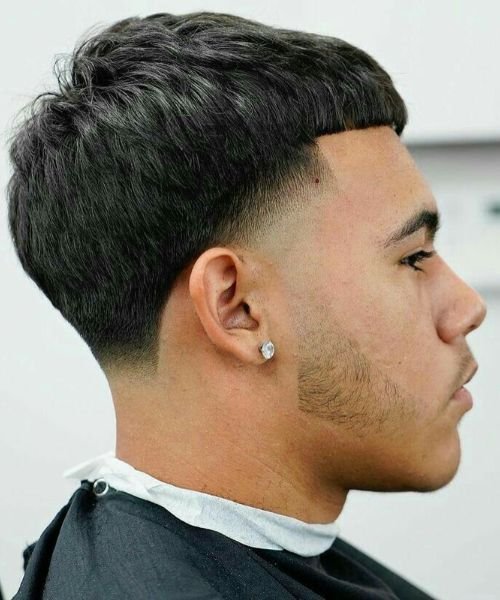
A French crop low taper fade is a men’s haircut with a short, textured top brushed forward into a fringe, and sides and back that taper gradually from longer hair to shorter hair, starting low near the ears and neckline. Think of it as a classic French crop haircut with a soft, low taper instead of a dramatic high fade.
The cut at a glance:
- Top: About 1.5 to 3 inches, layered lightly and brushed forward.
- Fringe: Sits just above the eyebrows, blunt or soft textured.
- Taper: Starts low, about an inch above the ear, and finishes at the sideburns and neckline.
- Best for: Straight, wavy, and curly hair, and most face shapes.
- Upkeep: A barber visit every 3 to 4 weeks, with a five-minute styling routine.
Three parts define the cut: the top, the fringe, and the taper. When all three are balanced, the haircut looks tidy from every angle. When one part is off, it can read as a different style entirely. Understanding each piece makes it much easier to talk to your barber.
The French Crop Top and Fringe
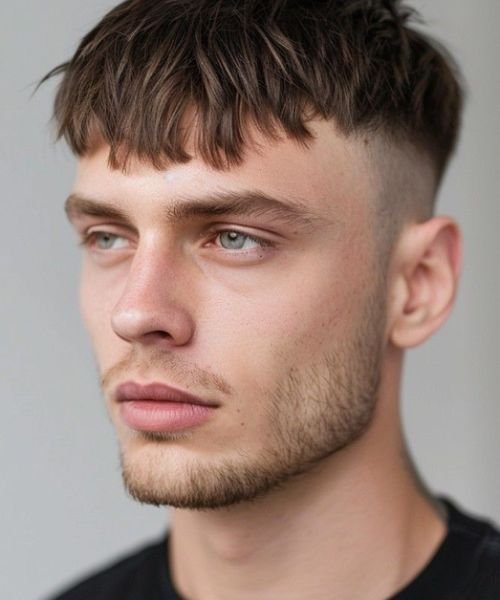
The French crop is a close cousin of the Caesar cut. Hair on top stays short, usually around 1.5 to 3 inches, and is styled forward so the fringe sits across the forehead. The fringe is the signature feature.
In a classic version, the fringe is cut fairly straight and blunt. In a modern version, the barber point cuts the ends, which means snipping into the hair at an angle to break up the line. The result is a soft textured fringe with a slightly jagged edge.
Fringe length matters more than most people expect:
- A fringe that stops just above the eyebrows looks deliberate and sharp.
- A fringe that creeps lower starts to resemble a bowl cut.
- A fringe that sits too high loses the crop effect altogether.
The top also carries the texture. Barbers layer the hair lightly so it separates instead of lying in one flat sheet. That is why the style can work on straight, wavy, and curly hair. The barber adjusts the layering to match your hair texture and growth pattern.
What Makes the Taper “Low”?
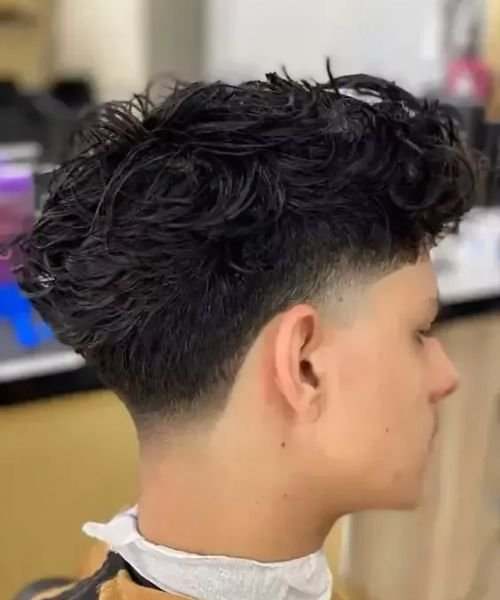
A taper is a gradual shortening of hair along the sideburns and neckline. A low taper keeps that shortening close to the edges. The blend usually starts about an inch above the ear and finishes at the neckline and sideburns, so most of the side hair stays soft and natural.
In practice, a low taper means:
- The shortest length sits right at the edges: around the ear, sideburn, and nape.
- The sides keep more length than they would in a mid fade or high fade.
- The blend rises only slightly, so the cut looks clean without a strong contrast line.
Barbers measure length with clipper guards. A #1 guard leaves about 1/8 inch, a #2 leaves about 1/4 inch, and a #3 leaves are about 3/8 inch. A low taper often finishes around a #1 or #2 at the edges and steps up to a #3 or #4 higher on the side. Every barber blends a little differently, so treat those numbers as a conversation starter, not a rule.
One more point is worth knowing. People often say “taper” and “fade” as if they mean the same thing. Technically, a taper is more gradual and leaves more hair, while a fade usually goes shorter, often down to skin. The low taper fade sits between the two, giving you the gentle taper look with the option to cut the edges closer. We cover that choice in the taper finishes section below.
Will a French Crop Low Taper Fade Suit You?
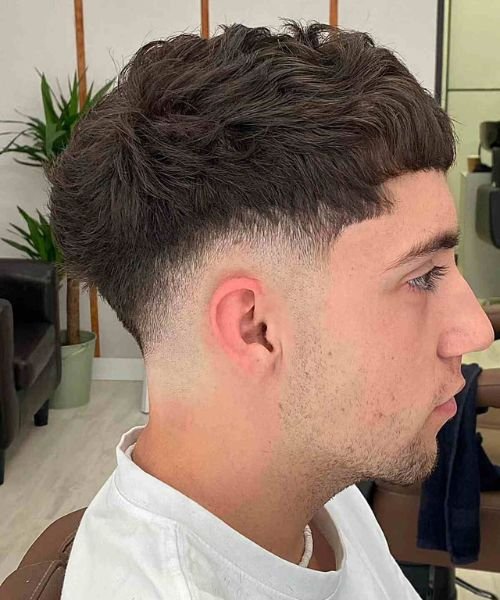
The short answer is probably yes, with a few adjustments. This is one of the more forgiving short haircuts, but hair type, face shape, and hairline all change how it should be cut. Use the sections below to judge your own situation.
Suitability by Hair Type and Density
Hair density is how many strands grow per square inch of scalp. Hair texture is the shape of each strand: straight, wavy, curly, or coily. Both affect how the crop sits, so your barber should look at them before picking up the clippers.
Straight or Fine Hair

Straight hair is the textbook match. It falls forward naturally and holds a clean fringe line without much effort.
The risk with fine hair is a flat, thin-looking top. To avoid that:
- Ask for light point cutting and keep the top slightly longer, around 2 inches, so you have something to style.
- Skip a very heavy blunt fringe if you can see scalp at the front.
- Add lift with a pinch of texture powder or a spritz of sea salt spray.
Wavy or Thick Hair
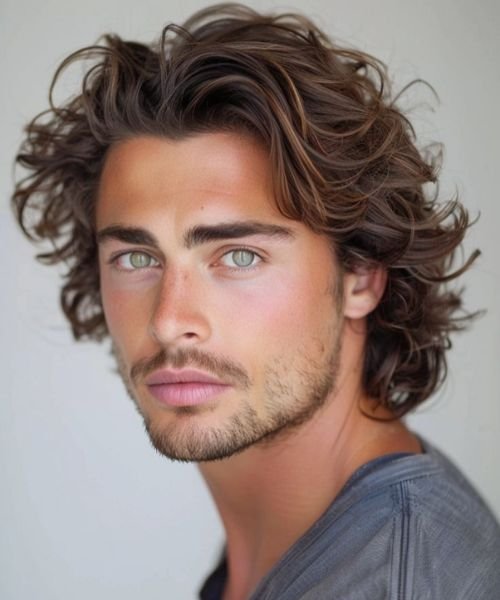
Wavy hair adds natural movement, so the fringe looks lived in without much work. Thick hair gives the crop weight and presence, but it can puff up on top.
Ask your barber to remove bulk through texturizing and keep the fringe length controlled. The low taper helps because it stops the sides from ballooning outward as the hair grows. If your waves are strong, keep the top around 2 to 3 inches so the weight pulls the wave down instead of letting it spring up.
Curly or Coily Hair
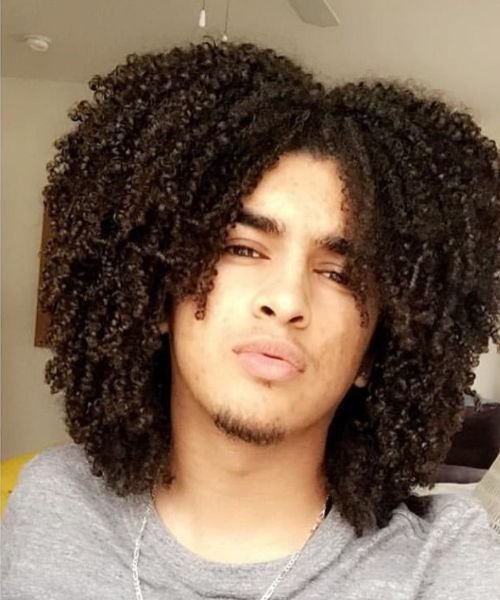
This cut works well on curls and coils, but the recipe changes. Instead of a razor-straight fringe, ask for a curly crop: a defined shape on top and a clean taper at the sides.
Keep these points in mind:
- Curls shrink as they dry, so a fringe that looks long when wet may sit well above the forehead once dry.
- Tell your barber your curl pattern and ask them to cut with the hair in its natural state when possible.
- On tight coils, the low taper creates contrast with the top and frames the face neatly.
- Use a moisturizing curl cream so the top stays defined instead of dry and fuzzy.
Face Shape, Forehead and Hairline Considerations
Face shape changes which fringe works best. The goal is balance: the haircut should make your proportions look even.
- Oval face: Nearly every version works. This is the easiest shape to fit.
- Round face: Choose a textured fringe with a bit of height on top. A heavy, flat blunt fringe can make the face look wider. Keep the taper tight at the sides.
- Square face: A soft textured fringe balances a strong jawline. A blunt fringe adds to the angular look, which some men like.
- Oblong face: Keep the fringe slightly fuller and lower to shorten the look of the face.
- Heart or diamond face: The fringe balances a wider forehead. Keep the sides a touch fuller.
Hairline matters just as much:
- High forehead: A forward fringe covers part of the forehead and reduces the look of height.
- Low forehead: Keep the fringe shorter so it does not crowd the face.
- Receding hairline: A textured, forward-styled fringe helps soften recession at the temples. Ask for a natural hairline instead of a sharp line-up, because a hard edge can highlight the gap.
Cowlicks, Crown Thinning and Sensitive Skin
Some conditions need a more careful approach.
- Cowlicks: A cowlick is a patch of hair that grows in a different direction. If it sits at the front hairline, ask your barber to leave the fringe a little longer so the weight holds it down, or to cut with the direction of growth instead of against it. Short crops can also make cowlicks easy to control, so this is often manageable.
- Crown thinning: Keep the top slightly longer around the crown and avoid a very tight taper at the back, which can exaggerate the contrast. A textured top hides thin spots better than a smooth, flat one. If thinning is fast or patchy, a dermatologist can tell you what is going on.
- Sensitive skin: Choose a natural low taper instead of a skin-close finish. Ask the barber to avoid a razor on the neckline and use a soothing aftershave balm.
French Crop Low Taper Fade Variations
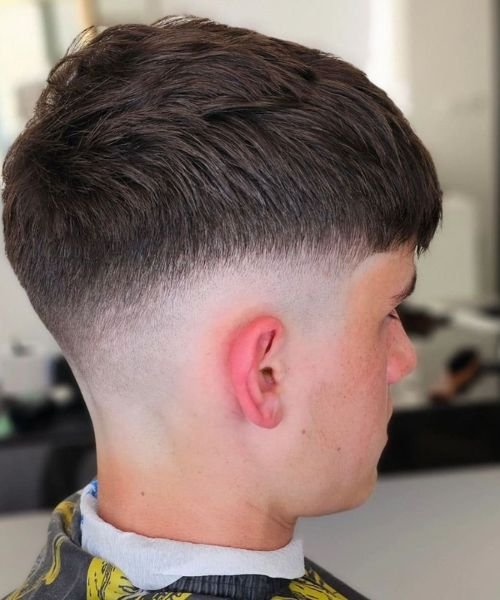
Once you know the basics, small changes create very different looks. These variations let you personalize the cut without leaving the French crop family.
Fringe and Top Variations
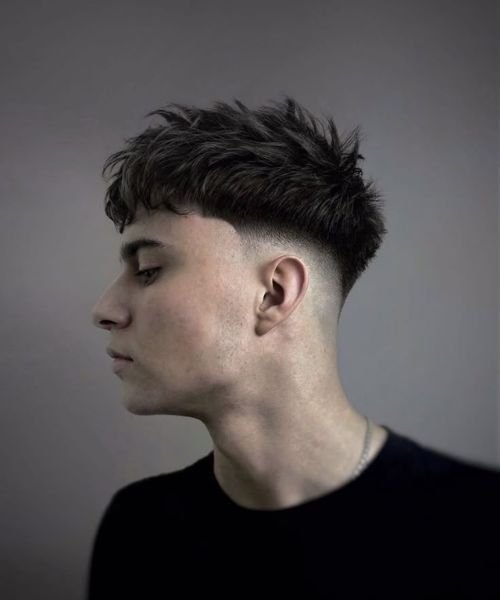
Most variations come from the fringe.
- Blunt fringe: A straight line across the forehead. Sharp, structured, and classic. It needs regular trims to stay crisp.
- Soft textured fringe: Point cut for a broken, less rigid line. It is more forgiving and grows out gracefully.
- Choppy French crop: Extra layering on top for a messy, piecey finish. It suits guys who want a casual look.
- Longer fringe: Top length closer to 3 inches with a fringe that reaches the eyebrows. It gives more styling choices.
- Angular or side-swept fringe: A diagonal line that adds asymmetry and draws attention away from a wide forehead.
- Short French crop: The most minimal version, with almost no styling needed.
Variations for Straight, Wavy and Curly Hair
| Hair type | Best version | Suggested top length | Styling note |
| Straight or fine | Soft textured fringe or blunt fringe | 1.5 to 2.5 inches | Add texture powder for volume |
| Wavy or thick | Choppy crop with texturizing | 2 to 3 inches | Remove bulk, keep fringe controlled |
| Curly or coily | Curly crop with defined top | 1.5 to 3 inches | Cut with natural curl, use curl cream |
Natural, Shadow and Skin-Close Taper Finishes
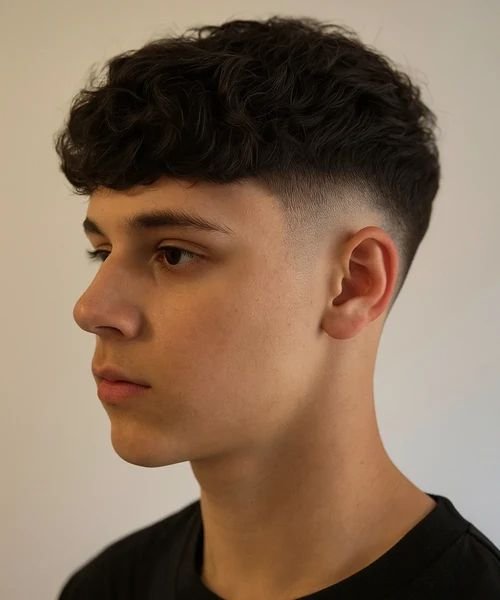
The “low” in the cut describes where the taper starts. The finish describes how short it goes at the edges.
- Natural low taper: The edges stay at a #2 or #3, with no bare skin. It looks soft and grows out slowly. This is the most beginner-friendly option.
- Shadow taper: A very light, smooth blend where the hair fades into a faint shadow around the ear and nape. It reads as clean from a distance and soft up close.
- Skin-close taper: The edges are clipped very short, close to the skin. Contrast is stronger and the look is sharper, but it grows out faster and can irritate sensitive skin.
If you are trying the French crop low taper fade for the first time, start with the natural or shadow finish. You can always go shorter at your next appointment. You cannot go longer.
French Crop Low Taper Fade Comparisons
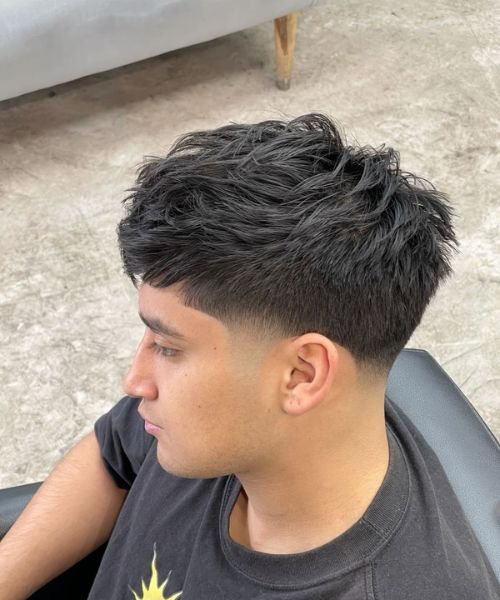
Many barbershop terms overlap, which is why people leave with a haircut they did not expect. These comparisons clear up the confusion.
Low Taper vs Low Fade, Mid Fade and High Fade
| Cut | Where it starts | How short at the edges | Contrast | Upkeep |
| Low taper | About an inch above the ear | Short but not bare | Soft and subtle | Easier |
| Low fade | Just above the ear | Can reach skin | Moderate | Moderate |
| Mid fade | Around the temple level | Often to skin | Strong | Higher |
| High fade | High on the head, near the crown | Usually to skin | Very strong | Highest |
A taper is gradual and leaves more hair. A low fade changes length faster and can reach the skin. A mid fade and a high fade climb higher up the head, so the top looks more separate from the sides.
For a French crop, a low taper is the safest and most flexible choice. It frames the fringe without stealing attention from it. A high fade pushes the eye upward and works better when you want a bolder, more modern look.
French Crop vs Textured Crop, Caesar Cut and Crew Cut
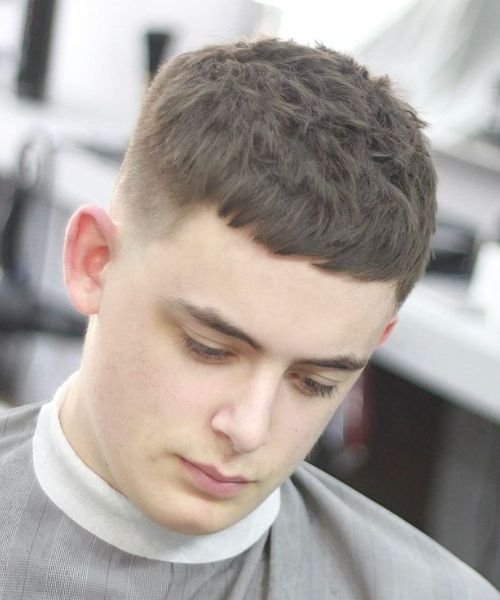
These four cuts look alike from across the room. The details separate them.
| Cut | Top length | Fringe | Texture | Overall feel |
| French crop | 1.5 to 3 inches | Defined, forward, blunt or soft | Light to medium | Neat and controlled |
| Textured crop | 2 to 4 inches | Uneven, choppy | High | Relaxed and messy |
| Caesar cut | Short and even | Short, blunt, straight | Very little | Classic and minimal |
| Crew cut | Short, longer at the front | Usually no real fringe | Low | Sporty and traditional |
In short:
- A Caesar cut has an even length on top with a short, straight fringe.
- A French crop leaves the fringe longer and gives it more shape.
- A textured crop is longer and messier, with more movement.
- A crew cut is shorter on the sides, longer at the front, and rarely has a true fringe.
If you want precision, choose the French crop. If you want movement, choose the textured crop. If you want the least styling, the Caesar is hard to beat.
What Should You Ask Your Barber For?
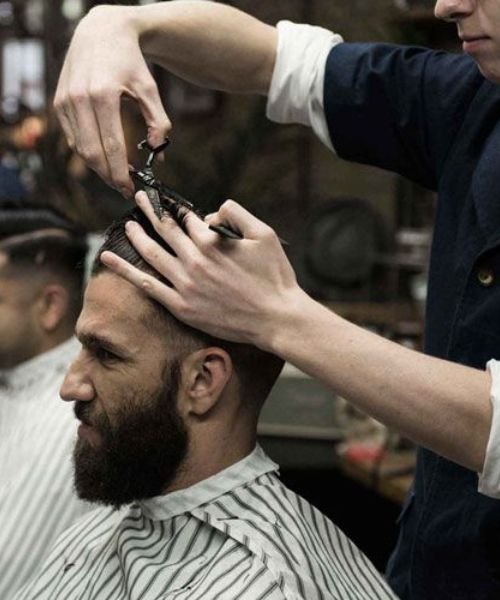
Walking in with the right words saves time and protects your hair. Most bad haircuts come from vague requests, not bad barbers.
The Barber Consultation Checklist
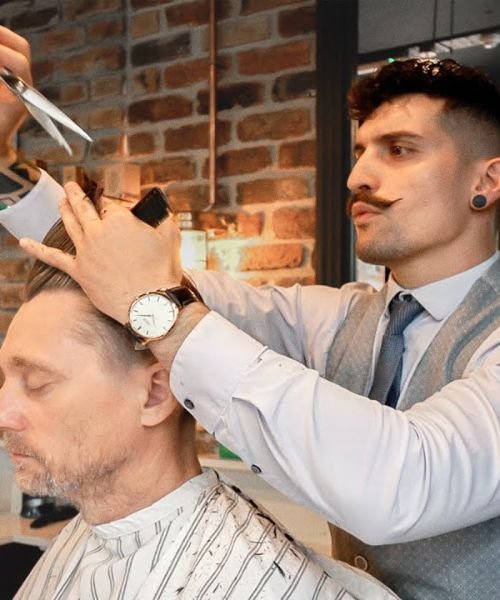
Before the clippers start, cover these points:
- Name the cut: Say “French crop with a low taper fade.”
- Top length: Give an approximate number, such as 2 inches, or point to it on your head.
- Fringe length: Say where you want it to land, such as just above the eyebrows.
- Fringe style: Choose blunt or soft textured.
- Taper finish: Say natural, shadow, or skin-close.
- Sideburns and neckline: Ask for a tapered neckline instead of a squared block, and decide on sideburn length.
- Hairline: Choose a natural hairline or a sharp line-up at the temples.
- Your hair issues: Mention cowlicks, thinning areas, or sensitive skin.
A Copyable Barber Script
Here is a script you can copy and adjust:
“I’d like a French crop with a low taper fade. Please keep the top about two inches with a textured fringe that sits just above my eyebrows. For the sides, I’d like a natural low taper, starting about an inch above the ear and finishing at the neckline. Please keep the sideburns tidy, taper the neckline instead of squaring it, and leave my natural hairline instead of cutting a sharp line-up. I have a cowlick at the front, so please check my growth pattern first.”
If you prefer a shorter version, try: “French crop on top, low taper on the sides, soft fringe, natural neckline.”
How to Use Reference Photos Without Getting the Wrong Cut
A photo is helpful, but it can mislead. A picture shows someone else’s head, hair, and lighting. To use one well:
- Bring two or three photos from different angles, including the side and back.
- Choose a photo of hair similar to yours: same texture, same density, same hairline.
- Point to specifics: “I like this fringe length” or “I like the taper here.”
- Ask what will not work: A good barber will tell you if your cowlick or density changes the result.
- Avoid heavily edited images: Filters and smoothing hide real texture.
The photo starts the conversation. It should not replace it.
A few mix-ups come up again and again in the chair. Men ask for a “fade” and receive a skin fade when they wanted a soft taper. Others say “short on top” and end up with a fringe that is too short to style. Others forget to mention the neckline, so the barber chooses a squared block by default. Naming the taper finish, the fringe length, and the neckline shape closes all three gaps before any hair is cut.
Also Read This: Low Taper Fade Short Hair
How to Style a French Crop Low Taper Fade
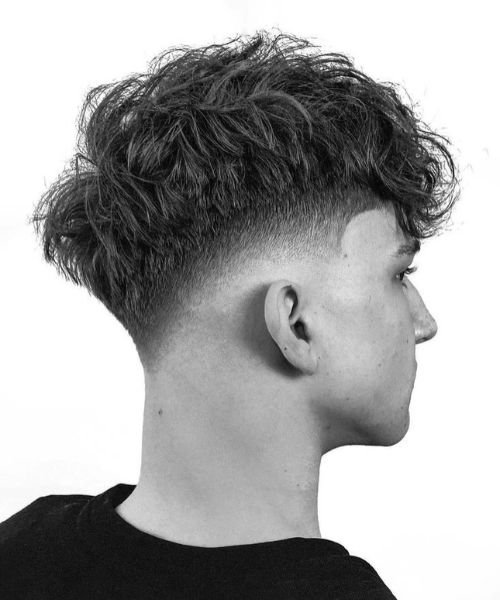
This is a low effort cut when you know the routine. Most of the work is done by the haircut itself.
A Five-Minute Everyday Styling Routine
- Start with damp hair. Towel dry until the hair is damp, not dripping.
- Apply a pre-styler if needed. A light spritz of sea salt spray adds grip, especially for fine hair.
- Blow-dry forward. Use your fingers or a small round brush to push the hair toward the fringe. Keep the heat on medium.
- Warm a pea-sized amount of product. Rub matte clay or matte paste between your palms until it turns tacky.
- Work it through the top. Start at the back and move forward, ending with the fringe.
- Shape the fringe. Push it forward and use your fingertips to separate sections for a textured look, or comb it flat for a blunt look.
- Check the sides. The taper needs nothing. Leave it clean.
Which Product Type Should You Use?
The right product keeps the finish matte and natural. A shiny result works against the cut.
- Matte clay: Firm, dry hold. Best for thick or wavy hair and a textured finish.
- Matte paste: Lighter and more flexible. Good for fine hair or a softer look.
- Sea salt spray: Adds grit and volume before styling. Helpful for fine, straight hair.
- Texture powder: Gives lift at the roots and absorbs oil. Useful for a flat crown.
- Light pomade: Works if you prefer a neater, slightly smoother fringe.
- Skip: Heavy gels, high-shine waxes, and stiff hairspray. They make the crop look stiff and wet.
Styling Mistakes and Weather Adjustments
Common mistakes:
- Using too much product: Start with a pea-sized amount. You can always add more.
- Styling soaking wet hair: Product slides off and the fringe falls flat.
- Brushing the fringe backward: That fights the cut. The style is built to go forward.
- Over-handling: Constant touching makes hair greasy and flat.
- Ignoring the neckline: Even a great top looks messy with a grown-out nape.
Weather changes how the cut behaves:
- Humidity: Wavy and curly hair can puff up. Use a bit more clay and keep the fringe controlled.
- Wind: A light mist of flexible hairspray helps the fringe stay in place.
- Rain: A cap or hood may flatten the fringe. Re-shape with fingers when you get inside.
- Hot weather: Use less product and rely on powder to absorb oil.
- Cold, dry weather: Static can make fine hair fly. A tiny amount of paste calms it.
Maintenance, Grow-Out and Scalp Care

The French crop low taper fade is easier to maintain than a high skin fade, but it still needs attention.
How Often Should It Be Trimmed?
Most barbers suggest a trim every 3 to 4 weeks for a crisp look. The sides and neckline show growth first, so they are the usual reason to book. The top grows more slowly and may only need work every 5 to 6 weeks.
You can stretch the timing if you choose a natural taper. A shadow or skin-close finish shows regrowth within two to three weeks, so it needs more frequent visits.
Keeping the Cut Presentable Between Visits
You can extend the life of the haircut with a few habits:
- Clean up the neckline: A small trimmer can tidy loose hairs at the nape. Do not cut a new line.
- Leave the fringe to your barber: An uneven fringe is hard to fix.
- Wash two or three times a week: Use a mild shampoo and avoid stripping the scalp.
- Rinse out product: Clay and paste can build up and dull the hair.
- Use a scalp moisturizer or light conditioner if dry: This helps flaking and itch.
Growing It Out Without an Awkward Phase
Grow-out is easier than with most short cuts, because the low taper never leaves a hard line to lose. The sides soften first, usually within three to four weeks, and the fringe gradually reaches the eyebrows and then the eyes.
If you plan to grow the top into a longer style, keep the neckline tapered and ask your barber for light trims every six to eight weeks. That removes straggly ends without costing you length. Use a little sea salt spray or paste during the in-between weeks so the extra length looks styled, not unfinished. Most men can leave the crop behind and move into a quiff or a textured fringe in a few months without a visible bad stage.
Close-Cut Irritation and When to Reconsider a Skin Finish
Clipper-close areas can cause razor bumps, ingrown hairs, or itchy patches, especially around the neckline and sideburns. This is more common with tightly coiled hair and sensitive skin.
To reduce irritation:
- Ask the barber to avoid cutting against the grain with a razor.
- Apply a cool compress after the cut if the skin feels hot.
- Use a gentle, fragrance-free moisturizer on the neckline.
- Do not pick or squeeze bumps.
If you get repeated bumps or irritation, reconsider a skin-close finish. Moving to a natural low taper at a #2 or #3 often solves the problem. If you see pus, spreading redness, or pain, check with a doctor or dermatologist.
Should You Get This Haircut?
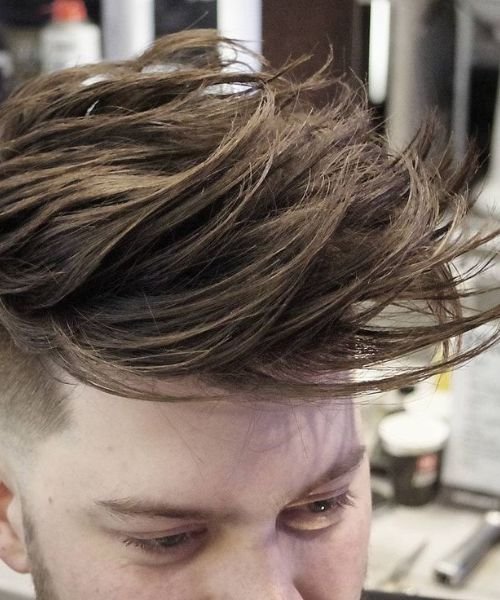
This haircut is a smart choice if you want a tidy look with low styling effort. It suits most hair types, most face shapes, and most dress codes.
It is a good fit if:
- You want a short cut that still looks styled.
- You like a forward fringe.
- You can visit a barber every 3 to 6 weeks.
- You prefer a clean but not extreme look.
Think twice if:
- You dislike the hair on your forehead.
- You want a long, flowing top.
- You have a very low hairline and a heavy cowlick at the front.
- You cannot get regular trims.
If you are unsure, start with a natural taper and a soft textured fringe. It is the safest version, and it is easy to adjust later.
Frequently Asked Questions
What is a French crop low taper fade?
It is a short, textured top with a forward fringe and sides that taper gradually from near the ears down to the neckline.
Is a French crop low taper fade the same as a French crop with a low fade?
Not exactly. A taper is gradual and leaves more hair, while a low fade can go shorter or down to skin.
Does a French crop low taper fade suit every face shape?
It suits most. Round faces do best with a textured fringe, and square or oval faces can handle blunt versions.
How do I ask a barber for a French crop low taper fade?
Say “French crop with a low taper fade,” then give top length, fringe length, and your preferred taper finish.
How often should I get a French crop low taper fade trimmed?
Every 3 to 4 weeks keeps it crisp. You can stretch to 5 or 6 weeks with a natural taper.
Can I get a French crop low taper fade with curly hair?
Yes. Ask for a curly crop with a defined top and a clean low taper on the sides.
Is a French crop good for a receding hairline?
Often, yes. A textured fringe and natural hairline help soften recession at the temples.
What product is best for a French crop?
A matte clay or matte paste works best. Use a pea-sized amount on damp hair.
How long does it take to grow out?
The top grows out easily over several weeks. The taper softens within three to four weeks.
Is the French crop low taper fade good for thin or fine hair?
Yes, with light texturizing and a slightly longer top. Add volume with sea salt spray or powder.
Conclusion
The French crop low taper fade is a practical, flattering haircut. Its short, forward fringe and soft low taper give you a neat shape that suits many hair types and face shapes. With the right fringe length, taper finish, and styling product, it looks polished every day, from the office to the weekend.
Before your next appointment, decide your top length, fringe style, and taper finish, and bring a few reference photos. Use the barber script above, style with matte clay, and trim every few weeks. A clear request and a simple routine are all you need to wear it well.
