

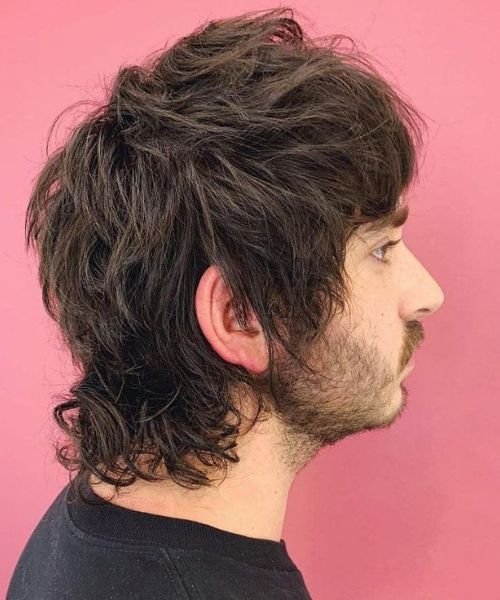
The redneck mullet has outlasted every trend that tried to bury it. Short sides, short hair on top, and a longer back make a country-inspired haircut that still turns heads in 2026. Barbers across the USA see steady requests for it, from rural communities to big city shops. Whether you want a vintage mullet hairstyle or a fresh modern take, there is a version built for you.
This guide walks you through the classic, textured, and tapered versions of the cut. You will learn which hair types and face shapes suit each one, which products give the best hold, and how to keep the shape sharp between visits. Pick your style, save a photo, and walk into the chair ready.
Quick Answer in 30 Seconds
A redneck mullet haircut pairs short hair on top and short sides with longer hair in the back. It comes in three main versions: classic, textured, and tapered. It works on straight, wavy, curly, and thick hair, and it needs a trim every 3 to 6 weeks.
Key facts at a glance:
- Best for: men who want a rugged men’s haircut with real personality
- Main types: classic, textured, and tapered
- Typical back length: 3 to 8 inches, based on hair type
- Upkeep level: low to medium
- Best products: matte clay, texture powder, styling paste, and sea salt spray
What Is a Redneck Mullet Haircut?
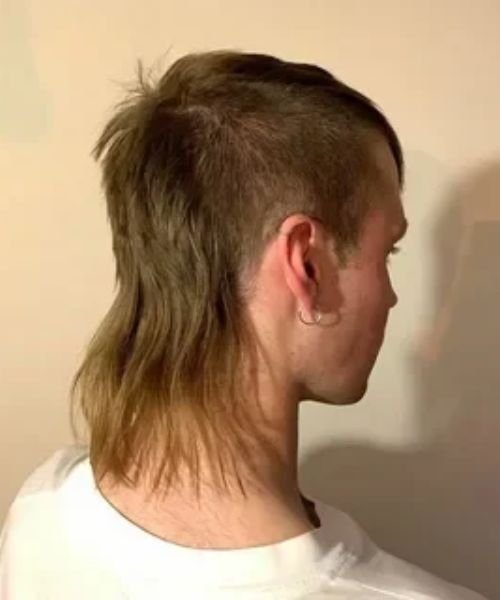
A redneck mullet haircut is a men’s hairstyle with short hair on top and on the sides, and longer hair in the back. Most people sum it up with one phrase: business in the front, party in the back. The back section can fall to the neck, the collar, or even the shoulders.
The word “redneck” in the name comes from American culture. People link the cut to country music, pickup trucks, rodeos, and small towns across the South and Midwest. Some folks use the term as a joke. Others wear it with pride as a nod to rural communities and working class roots. Either way, the haircut stands for individuality and confidence more than anything else.
The shape is much older than the label. Rock stars of the 1970s and 1980s made it famous, and country singers like Billy Ray Cyrus carried it into the 1990s. Then it vanished from most salons for years. Now it is back. Barbers credit social media, 1980s nostalgia, and a love of medium length hair for the revival. Events such as the USA Mullet Championships keep the look in the spotlight too.
So why is the cut back now? A few things lined up at once. Social media made bold hair easy to share, and short videos of fresh mullets get huge reach. Pop culture keeps the look alive too. Fans still remember Billy Ray Cyrus, and movie fans still joke about Joe Dirt. Actors and athletes have been spotted with modern versions, which gives regular guys permission to try it.
There is a practical side as well. Men want medium length hair that does not need a strict daily routine. A mullet gives you a short, tidy front for work and a longer back for personality. It also lets you grow your hair without looking shaggy all over. For many guys, that balance is the whole appeal.
Finally, the cut has lost much of its old stigma. Barbers say clients now ask for it by name and show up with photos. People wear it as a fun, confident choice rather than a joke. That shift explains why the country mullet no longer feels like a costume. It feels like a real option for everyday life.
Every country mullet shares a few core traits:
- Short hair on top that stays easy to control
- Short sides, either trimmed close, tapered, or faded
- Longer hair in the back that defines the whole shape
- A clear length contrast between the front and the rear
- Room for personal style, like waves, curls, or a mustache
A quick note on the name. “Redneck” can be a loaded word, so use it in good humor. Many people also say traditional mullet haircut or classic country mullet, and any barber will know what you mean.
Classic Redneck Mullet
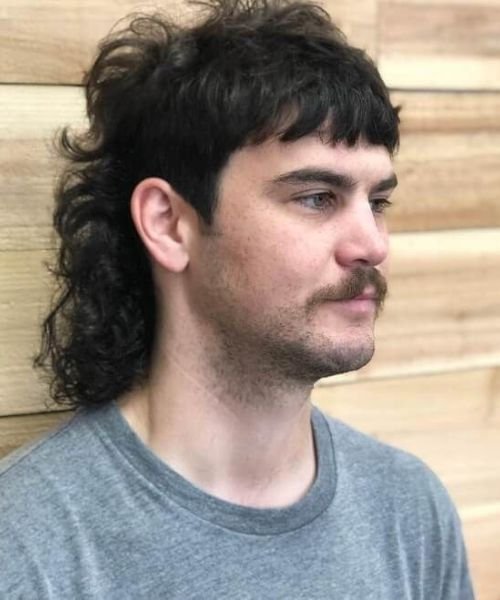
The classic redneck mullet is the version most people picture first. It follows the traditional mullet blueprint from the 1980s. The top is short and slightly feathered. The sides stay short and close to the ears. The back falls long, often past the collar, and hangs straight or with a soft flip.
This is pure classic country style. Think ball caps, worn denim, and a mustache that matches the attitude. The shape is simple, so the cut is easy to explain to a barber and easy to repeat.
Key features of the classic cut:
- Short hair on top with light layers for volume
- Short, blunt sides with a clean line around the ears
- Longer hair in the back, cut straight across
- Little to no fade, since the focus is the length contrast
Who it suits: Men with straight or slightly wavy hair and medium hair density get the best result. Straight hair shows the clean line of the back very well. Men with a round face can wear it too, as long as the top gets a bit of lift. Height on top makes a round face look longer.
How to style it: Dry the top with a blow dryer and push the hair up and back with your fingers. Work in a pea-sized amount of styling paste for light hold. Let the back hang natural.
Upkeep: Plan a trim every four to six weeks. The sides lose their shape first, and the back needs a quick tidy so the ends stay healthy. If you love vintage looks, this is the cut to choose.
Textured Redneck Mullet
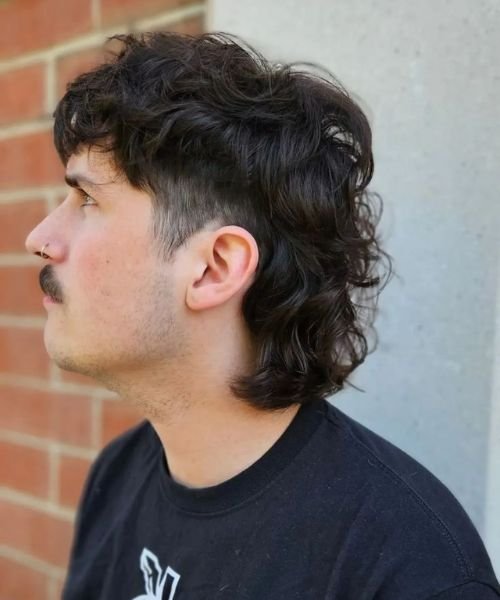
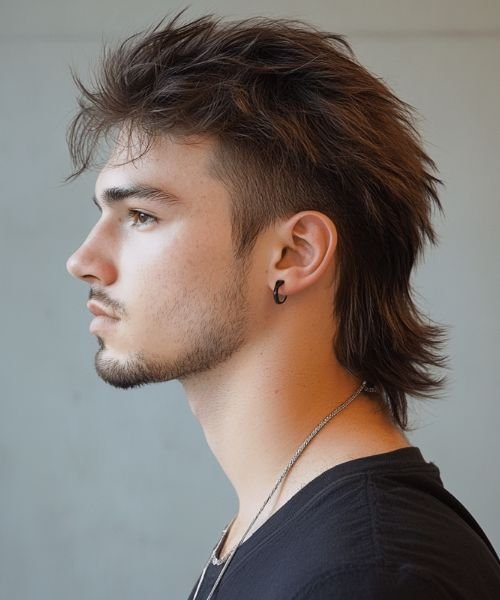
The textured redneck mullet keeps the same short front and long back, but it swaps blunt lines for movement. A barber uses point cutting and razor work to build textured layers through the top and the back. The result looks messy on purpose. It feels loose, lived in, and a little rebellious.
This version fits modern styling techniques well. It gives you natural volume without much effort, and it hides small growth mistakes better than a sharp cut does.
What makes it textured:
- Choppy layers on top for extra hair volume
- Feathered, uneven ends in the back
- A relaxed fringe that falls forward or to the side
- Sides kept short but not skin tight
Best for: Wavy and curly hair. Natural texture does half the work, and the layers bring out the pattern. Men with fine straight hair can wear it too, but they will need a texturizing spray or texture powder to build grip.
Styling routine: Spray sea salt spray on damp hair, scrunch it, and let it air dry. For extra shape, finish with a small amount of matte clay on the top. Keep the back loose.
Upkeep: Book a trim every five to six weeks to refresh the layers. Between visits, skip heavy gels. They flatten the movement that makes this cut work.
Tapered Redneck Mullet
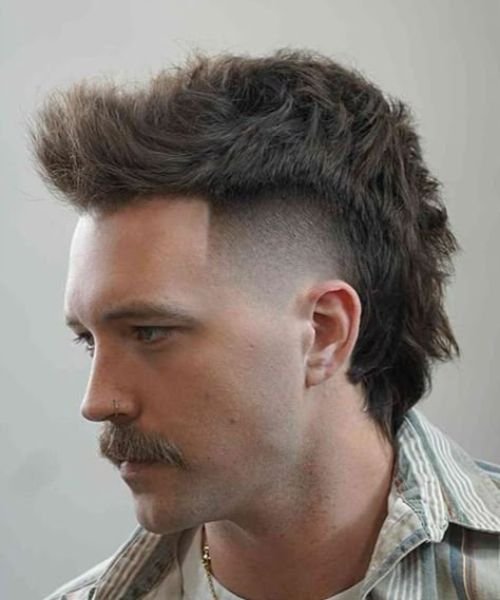
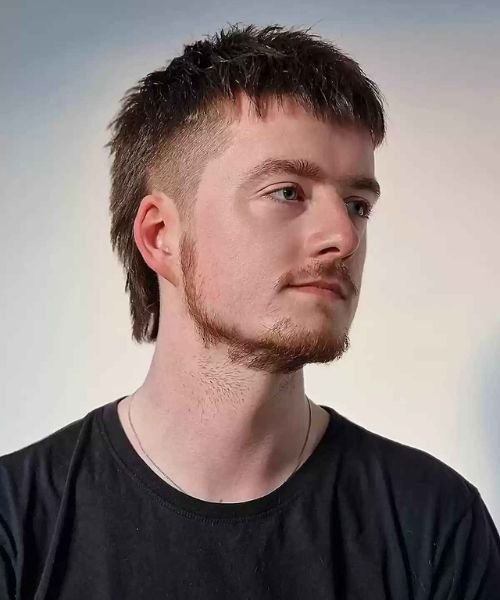
The tapered redneck mullet is the neat, work friendly choice. The sides and nape shrink gradually in length, then blend into the longer back. A low taper starts the fade near the ears. A mid or high taper starts higher up the head and shows more skin.
Because the transition is smooth, this style looks sharp in an office, a shop, or a church pew. It is the best pick for men who want a short front long back haircut without the shock factor.
Core traits:
- Short hair on top with a soft, natural finish
- Sides that fade from short to shorter at the ears
- A clean taper at the neck and a defined back length
- A balanced silhouette that suits most face shapes
Taper options:
- Low taper: subtle, clean, and ideal for conservative workplaces
- Mid taper: balanced contrast with a modern edge
- High taper: bold, with more skin showing at the sides
- Neck taper: blends the nape into the longer back for a polished finish
Best for: Square faces and thick hair. The taper removes bulk from the sides, and it softens a strong jawline when the top keeps some texture. It also works well on straight hair that needs shape.
Styling routine: Use a light styling paste on the top. Comb it back or to one side. Leave the back alone, or tuck it behind your ears for a cleaner profile.
Upkeep: A taper needs the most frequent visits of the three. Book barber trims every three to four weeks to keep the fade crisp. The back can wait a little longer.
Mullet Haircut Men: Classic vs Modern Styles
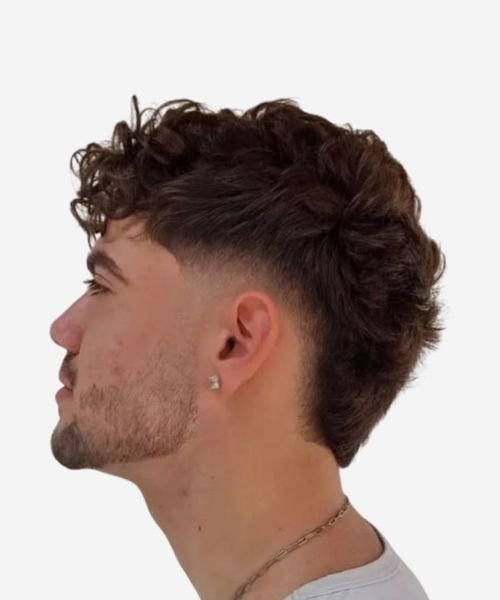
Men search for the mullet haircut in many forms, and the terms can blur. Here is the simple split. A traditional mullet is bold and blunt, with a big length gap between front and back. A modern mullet softens that gap with layers, fades, and tapering.
| Feature | Traditional Mullet | Modern Mullet |
| Sides | Short and blunt | Faded, tapered, or lightly layered |
| Top | Short and feathered | Textured, often with a longer fringe |
| Back | Long and straight | Mid length and layered |
| Finish | Smooth and classic | Messy and textured |
| Upkeep | Every 4 to 6 weeks | Every 3 to 6 weeks |
| Vibe | Vintage and country | Fashion forward and flexible |
Barbers now offer many mullet haircut variations. These are the most common:
- Mullet fade: a skin or low fade on the sides with a long back
- Two block mullet: a disconnected undercut with a heavy, textured top
- Shaggy mullet: choppy layers all over, close to a wolf cut
- Short or mini mullet: a small length gap that works in strict offices
- Curly mullet: natural curls on top and back with tapered sides
The country style sits between both camps. It keeps the spirit of the old cut and borrows the best modern habits, like texture and a tidy neckline. The right choice depends on your hair, your job, and how much time you want to spend at the mirror.
Style pairings that work. The cut looks best when the rest of your look matches its mood. A trimmed mustache or a short beard suits the classic version, because both keep the old school feel. A clean shaven face gives the modern version a sharper edge. Add a ball cap, a flannel, or a leather jacket, and the whole look turns rugged in seconds. For work, keep the sides neat and tuck the back behind your ears.
A short look at pop culture. The mullet has a long screen history. Country stars made it a symbol of small town pride in the 1980s and 1990s. Comedy films turned it into a punchline, and the Joe Dirt character is still the picture many people have in mind. Today, athletes and actors wear softer versions on red carpets and in sports arenas. That mix of humor and style is why the haircut keeps coming back, and why it never feels fully out of date.
Quick pick guide: If you want a men’s mullet haircut with the most movement, go for a textured mullet. If you need a neat finish for work, choose a tapered mullet. If you like the old school feel and want the simplest upkeep, stay with the classic mullet. Any of the three can be dialed up or down. Ask for a shorter back to keep things subtle, or ask for more length and layers if you want a bold look. Your barber can mix elements from each version, so do not feel locked into one label. The best cut is the one you can style in the time you have.
How to Choose the Right Redneck Mullet Haircut
Choosing the right redneck mullet haircut comes down to six checks. Work through them in order, and you will land on a cut that fits your head, your hair, and your week.
- Check your face shape. A round face looks best with height on top and tight sides, which stretch the shape. A square face looks better with textured layers on top that soften the jaw. An oval face suits almost any version. A long face does well with a shorter top and more width at the sides.
- Study your hairline. A receding hairline works with a thicker fringe styled forward. A thinning crown looks better with a shorter back and more texture on top.
- Match your daily life. If you work in an office or a client facing job, choose the tapered style. If you work outdoors, a textured cut hides wind and hat hair.
- Count your styling time. Classic cuts take about two minutes. Textured cuts take about five. Tapered cuts need a quick comb and a fresh fade every few weeks.
- Think about your growth stage. Hair grows about half an inch per month. Going from short to a full back takes many months, and the middle stage looks awkward. Ask for a short mullet first, then let the back grow.
- Bring a reference. A photo or a short video helps your barber see the exact length, texture, and fade.
What to tell your barber:
- “Short on top, short sides, and four inches in the back.”
- “Add textured layers with point cutting.”
- “Taper the neckline, do not square it.”
- “I want low upkeep, so keep the fade soft.”
Clear words save you from a surprise. A barber who knows your goals can adjust the lengths to suit your face shape and your hair density.
Common mistakes to avoid:
- Asking for “a mullet” without giving lengths, which leaves too much to guess
- Choosing a very long back with fine, thin strands, which looks stringy
- Skipping the neckline cleanup, which makes the cut look unfinished
- Using heavy gel or wax, which weighs down the movement
- Cutting the sides at home with clippers and no guard, which can ruin the taper
A simple grow out timeline: If you start with short hair, plan for six to twelve months. Months one to three bring the awkward phase, so keep the sides trimmed and let the top and back build. Months four to six give you a short mullet with a visible length gap. Months seven to twelve let the back reach the collar or longer. Visit a barber every six weeks along the way to keep the shape clean and the ends healthy.
Patience pays off here. A mullet you grew on purpose looks far better than one that happened by accident.
Best Hair Types for a Redneck Mullet
Your hair type decides how a mullet falls, how much volume it holds, and how often you need to fix it. Hair density matters too. Density means how many strands grow on each square inch of your scalp. Texture means the shape of each strand: straight, wavy, or curly. Both factors shape your result.
| Hair Type | Best Style | Back Length | Key Product |
| Straight | Classic or tapered | 4 to 6 inches | Texture powder |
| Wavy | Textured | 4 to 6 inches | Sea salt spray |
| Curly | Textured or tapered | 4 to 8 inches | Curl cream |
| Thick | Tapered | 4 to 6 inches | Matte clay |
| Medium density | Any style | 3 to 6 inches | Styling paste |
Straight Hair
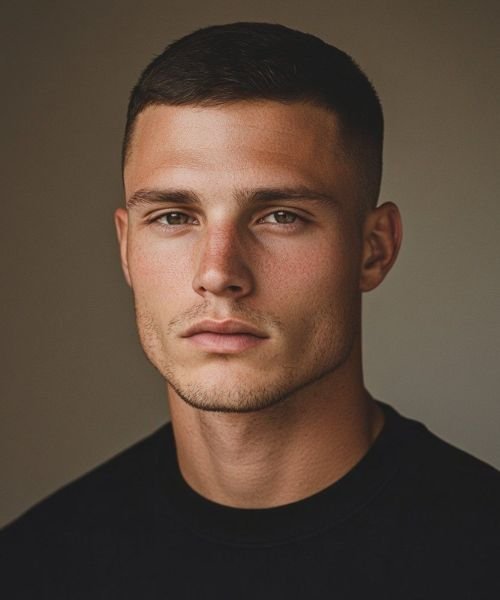
Straight hair gives the cleanest lines. The long back hangs smooth, and the contrast with the short top looks sharp. The downside is flatness. Without help, straight hair can sit limp on the crown, and the ends of the back can look stringy.
- Ask for point cutting on the top and the ends to add movement
- Use texture powder at the roots for lift
- Pick the classic or tapered style for a neat finish
- Keep the back at four to six inches so it stays full
A blow dryer and a light texturizing spray give straight hair the grip it lacks. Dry the top upward, then let the back fall natural.
Wavy Hair

Wavy hair is the easiest match. The natural bend adds body and movement without effort. It suits the textured version best, because the layers show off the wave pattern and add depth to the back.
- Apply sea salt spray to damp hair and scrunch upward
- Air dry for a relaxed, beachy finish
- Keep the back four to six inches for a soft wave
- Use a light mousse if your waves fall flat
Wavy hair also forgives small cutting errors. That makes the growing stage far less stressful than it is with straight hair.
Curly Hair
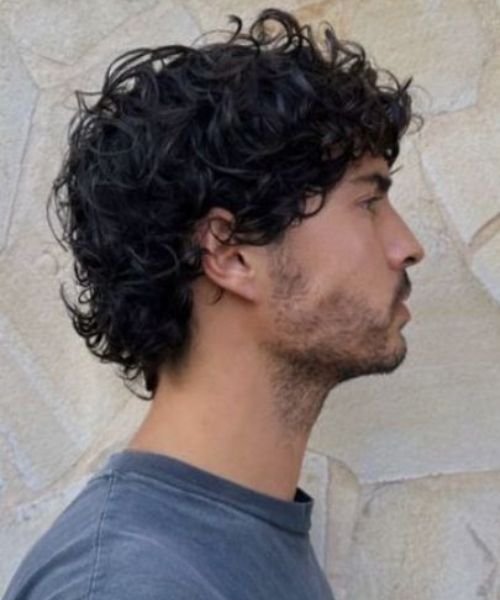
Curly hair brings the most personality. The curls add width and volume, so the cut needs careful length planning. Curls shrink when they dry, so a cut that looks long when wet can jump up two inches.
- Leave the top around three to six inches so curls can form
- Keep the back four to eight inches, based on how tight your curls run
- Taper the sides to one to three inches so the shape stays balanced
- Ask your barber to cut the hair dry or damp so they can see the curl pattern
Use a curl cream and a diffuser. Avoid brushing dry curls, because it causes frizz. A curly mullet needs moisture to look good, so condition often and keep the ends trimmed.
Also Read This: Low Taper Fade Asian Hair
Thick Hair
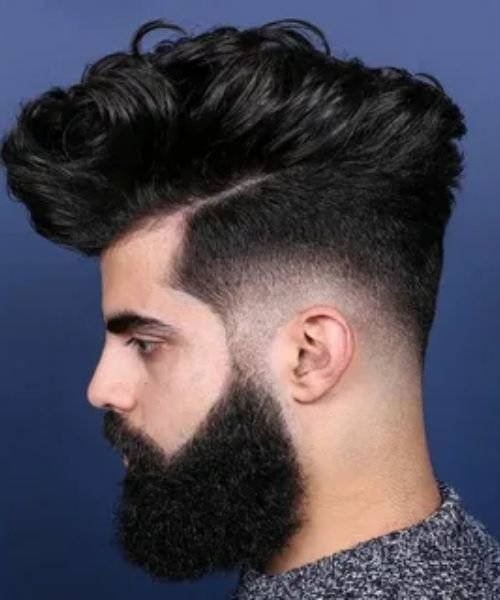
Thick hair holds shape well, which makes it a strong match. It can also feel heavy and bulky, especially on the sides, where it tends to puff out over the ears.
- Ask for thinning or texturizing shears to remove weight
- Choose a taper so the sides stay slim
- Use matte clay for control without shine
- Plan trims every four weeks, since bulk returns fast
Thick hair needs a firm hand with the cut. A good barber removes weight inside the layers, not just on the surface. That keeps the back light and lets it move.
Medium Hair Density
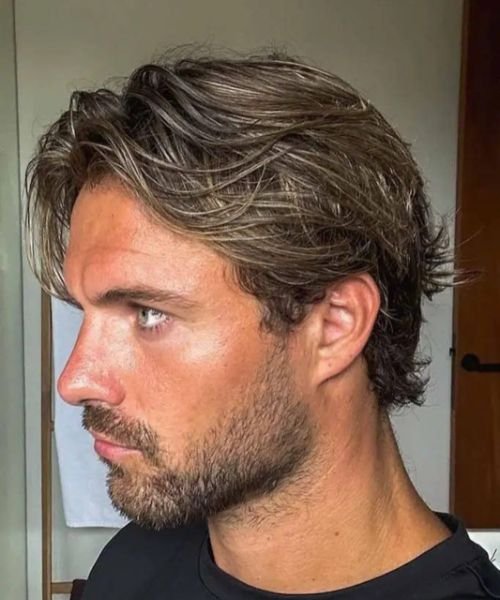
Medium density is the sweet spot. It holds a shape but does not weigh you down. Every type of mullet works here, from classic to tapered, so you have the most room to experiment.
- Choose any style based on your face shape and your job
- Use a light paste or texturizing spray for daily shape
- Try a longer fringe if you like a modern look
- If your strands run fine, keep the back a little shorter and add texture powder for volume
Try one version, live with it for a month, and then adjust at your next trim.
Quick Maintenance Tips for a Redneck Mullet
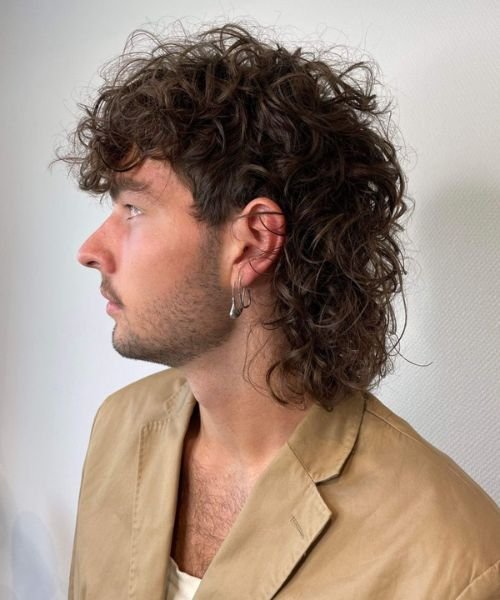
Most men pick this cut because it looks effortless. A little routine keeps it that way. The five habits below cover haircut maintenance from the barber chair to the bathroom shelf. Treat them like a checklist, and the style will stay clean without taking over your mornings.
Schedule Regular Trims
A mullet loses its shape fast. The sides grow out first, and the back drifts into a messy shape soon after. Regular barber trims fix both problems. Use this guide to set your calendar:
| Style | Trim Every | What Gets Trimmed |
| Classic | 4 to 6 weeks | Sides, ears, neckline |
| Textured | 5 to 6 weeks | Layers and ends |
| Tapered | 3 to 4 weeks | Fade, nape, sides |
If you are growing the back, keep the sides and top trimmed while the length builds. That makes the haircut look planned, even in the awkward stage. Book your next visit before you leave the shop, so the date does not slip.
Use Lightweight Styling Products
Heavy products weigh down a mullet and make it look greasy. Light products give hold and let the hair move. These are the best picks:
- Matte clay: firm control with no shine, great for thick hair
- Texture powder: instant lift at the roots for straight or fine hair
- Styling paste: flexible hold for the classic and tapered styles
- Texturizing spray: messy grip for a lived in finish
- Sea salt spray: beach waves for wavy and curly hair
Here is a simple five minute routine:
- Wash and towel dry until the hair is damp.
- Spray sea salt spray or texturizing spray through the hair.
- Dry the top with a blow dryer, lifting the roots as you go.
- Warm a pea-sized amount of clay or paste between your palms.
- Work it through the top, then shape the fringe with your fingers.
Start with less than you think you need. You can always add more.
Keep the Back Neat
The back is the star of the cut, so it must look intentional. Messy edges make the whole style look unfinished. Ask your barber to clean the neckline each visit. A rounded edge looks soft and natural. A squared edge looks bold and strong. A tapered neckline blends the hair into the skin for a modern finish.
Between visits, keep stray hairs off your collar. Check the area behind your ears, and trim flyaways with a small pair of scissors if needed. Brush or comb the back gently, and tie it up for work if your job needs it. A neat back is the difference between a rugged men’s haircut and a sloppy one.
Enhance Natural Texture
Fight your hair, and you lose time. Work with it instead. Natural texture gives a mullet its character, and a few small habits bring it out.
- Let your hair air dry when you can
- Use a diffuser on low heat for curls and waves
- Scrunch product upward instead of combing it flat
- Skip the brush on dry waves and curls
Straight hair can borrow texture from sprays and powders. Wavy and curly hair already has it, so protect the pattern with a gentle touch. Over styling is the most common mistake.
Protect Hair Health
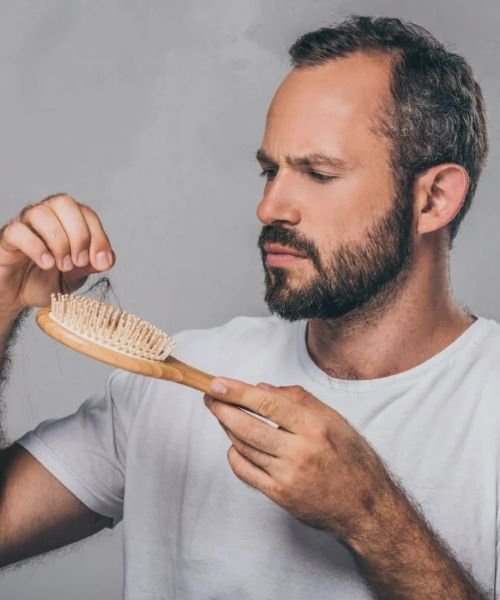
Healthy hair looks better, and it grows better too. Long hair in the back takes more wear than short hair, so give it care.
- Wash two to four times per week with a mild shampoo
- Add a conditioner to the length and ends, not the scalp
- Use a heat protectant before blow drying or flat ironing
- Trim split ends before they travel up the strand
- Wear a hat or use a leave in product in strong sun
Good hair growth starts at the scalp. Rinse out product buildup, massage your scalp while you shampoo, eat well, and sleep enough. If you notice heavy shedding or thinning, talk to a doctor or a trained stylist.
Quick weekly checklist:
- Check the sides and neckline in the mirror every Sunday.
- Shampoo and condition on your regular schedule.
- Deep condition once a week if your hair is curly or dry.
- Wash your brush, comb, and styling hands so the product does not build up.
- Note any shape problems and mention them at your next barber visit.
FAQ,s
What is a redneck mullet haircut?
It is a men’s haircut with short hair on top and short sides, plus longer hair in the back. Fans call it business in the front, party in the back.
How do you style a redneck mullet haircut?
Dry the top with a blow dryer, add a pea-sized amount of paste or clay, and let the back hang naturally. Use sea salt spray for waves.
Is a redneck mullet haircut still in style in 2026?
Yes. Barbers and fashion editors report strong demand for modern and country mullets, especially textured and tapered versions.
How often should you trim a mullet?
Trim every 3 to 6 weeks. Tapered cuts need visits every 3 to 4 weeks, while classic and textured cuts can stretch to 6 weeks.
What is the difference between a classic and a modern mullet?
A classic mullet uses blunt lines and a big length gap. A modern mullet adds layers, fades, and softer transitions.
Conclusion
A redneck mullet haircut is more than a throwback. It is a flexible, rugged men’s haircut that adapts to your hair type, face shape, and schedule. The classic, textured, and tapered versions each bring a different mood, so you can match the cut to your own style and your own confidence.
Start with a clear plan. Pick your version, choose light products, and keep your trims on a steady schedule. Show your barber a photo, and ask questions. Small habits keep the shape sharp and the mood confident. With the right care, your cut will look great in 2026 and long after.
